
Menu
High-Strength Concrete Mixes for Brookline Freeze–Thaw Pours
Pouring Concrete Brookline
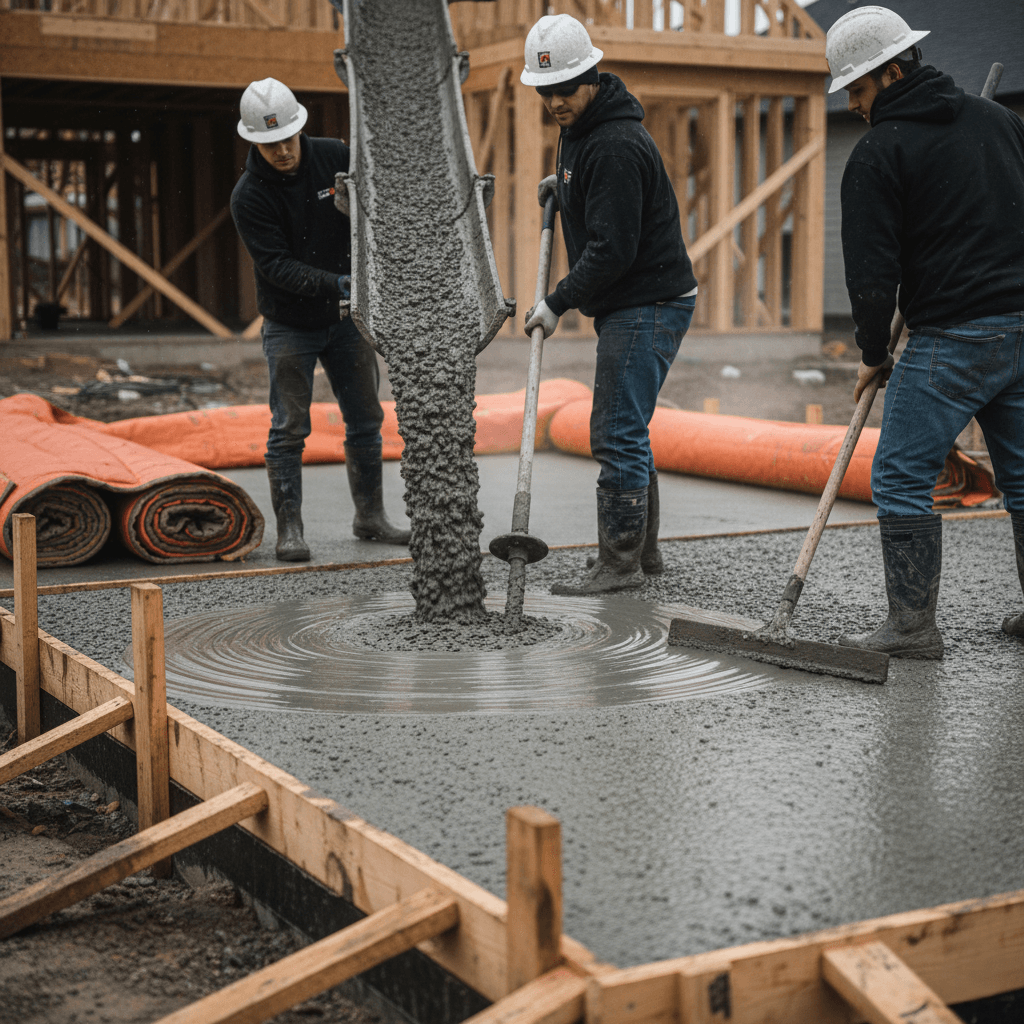
Pouring concrete in Brookline is more than just mixing cement, aggregate, and water. Our seasonal temperature swings, dominated by the freeze-thaw cycle, require special material science. Standard concrete mixes are highly susceptible to internal damage when water is trapped and freezes. To achieve lasting durability, contractors must use high-strength, engineered mixes designed for cold weather. Choosing the right components will make your hardscaping survive our New England winters.
The Importance of Air Entrainment
Air entrainment is the most critical factor for cold-weather concrete durability. This is the process of adding a chemical admixture that creates billions of microscopic air bubbles in the concrete. These tiny, intentionally placed voids are pressure relief chambers. They give space for water to expand when it freezes without stressing the surrounding material. Without air entrainment, your concrete will start to spall (flake) and scale within a few winters.
We specify mixes with the correct amount of air content for our climate zone. The required air content varies based on the aggregate size and the slump (wetness) of the mix. Testing on site ensures the concrete delivered meets these specs. This is non-negotiable for long-lasting driveways and sidewalks. It’s the key to preventing internal structural failure.
Choosing the Right PSI
Compressive strength, measured in pounds per square inch (PSI), is the durability of the finished product. 2500 PSI is fine for some interior slabs, but exterior applications in Brookline require much higher strength. We recommend a minimum of 4000 PSI for driveways and other traffic-bearing surfaces. Higher PSI concrete is more resistant to surface abrasion and chemical attack.
High-strength mixes have a lower water-to-cement ratio, so the finished product is denser and less permeable. Less permeable means less water absorption, which directly reduces the risk of freeze-thaw damage. This density also helps the concrete resist pitting from de-icing salts used on our roads. Investing in a higher PSI mix is a smart, long-term decision. It ensures maximum resistance to the elements.
Temperature Control During Pouring Concrete
The temperature of the concrete at placement has a huge impact on its strength and durability. When pouring concrete in cold temperatures, we must prevent freezing before curing starts. We often heat the mixing water or aggregates to keep the concrete above 50°F. Placing concrete on frozen ground can be detrimental.
In the winter, we use insulated blankets or heated enclosures to protect the fresh concrete. This is called cold-weather curing and allows the hydration process to proceed correctly. Protecting the surface from wind and rapid temperature drops prevents surface cracking. We prioritize curing conditions over speed of completion.
Proper Sub-Base Preparation
Even the best concrete will fail if the sub-base is unstable. Our process starts with thorough excavation and compaction of the subgrade. We use well-draining materials like gravel or crushed stone for the base layer. This prevents water from accumulating under the slab, which could cause frost heave.
A well-prepared base acts as a capillary break and prevents moisture from wicking up into the concrete. We install drainage systems where necessary to manage the water table. This foundation work is critical to support the weight of the slab and traffic loads. Quality control starts long before the mixing trucks arrive.
Proper Reinforcement and Joints
Air entrainment helps with internal damage, but reinforcement controls cracking from settling or shrinkage. We use steel mesh or rebar to distribute the stress across the slab. This structural element keeps small cracks from becoming larger, destructive ones. Proper reinforcement is key for long, narrow structures like driveways.
Control joints are another critical component of successful concrete work. We cut these joints into the slab shortly after pouring. These intentional weak points manage the natural shrinkage of the concrete as it cures. They encourage cracks to form neatly within the joint lines and keep the rest of the surface pristine. Proper joint placement protects the appearance and integrity of the whole structure.
Timely Finishing and Curing
Finishing the surface requires precise timing, especially with air-entrained, high-strength mixes. Overworking the surface can disrupt the air-void system and defeat the purpose of the air entrainment. Skilled finishers know exactly when to float and trowel the concrete to get the desired texture. A proper finish ensures both durability and beauty. Curing immediately after finishing is non-negotiable for maximum strength. We apply curing compounds that lock in the moisture needed for the cement hydration process. This prevents the concrete from drying out too fast and cracking. Slow, controlled curing is the key to getting that high PSI rating. It creates a strong, long-lasting surface.
Local Concrete Suppliers
We have strong relationships with local Brookline suppliers to get fresh, properly batched concrete. We monitor the delivery schedule closely, especially on cold days. Fresh concrete performs better and sets more predictably. Using local mixers allows us to adjust the mix design if unexpected weather changes occur. This local control reduces risk.
We specify the exact requirements, including admixtures, slump, and air content for every pour. This detailed approach eliminates guesswork and guarantees a consistent, high-performance product. We watch the mixing process closely for quality control. Every truckload must meet our standards.
Building for Brookline Homes
A high-quality concrete pour is an investment in your home’s future stability. The methods and materials we use are designed to outlast the competition. We protect your property from the structural wear and tear of our climate. You get a durable, low-maintenance surface that looks great for decades.
Trust us with your next hardscaping project. At Brookline Concrete Services, we are experts in pouring concrete that can withstand the toughest New England weather. We use high-strength, air-entrained mixes to deliver foundation strength and durability. Count on us for a better installation that will survive the freeze-thaw cycle year after year.
LATEST POSTS
High-Strength Concrete Mixes for Brookline Freeze–Thaw Pours
December 14, 2025
No Comments

Freeze–Thaw Concrete Foundation Repair for Brookline Homes
December 10, 2025
No Comments