Menu
Freeze–Thaw Concrete Foundation Repair for Brookline Homes
Concrete Foundation Repair Brookline
Living in Massachusetts has its charm, but it comes with the reality of battling the elements. Our winters are a cycle of freeze and thaw. This fluctuation puts a lot of pressure on our homes’ foundations. Over time, even the strongest concrete can crack or shift. Identifying and repairing concrete foundation issues early is key to preserving the integrity of your property.
Frost Heave
Soil has moisture that expands when it freezes. In clay-heavy soils common in Brookline, this expansion is significant. When the ground freezes, it lifts or “heaves” the foundation up. When it thaws, it settles, often unevenly. This constant movement fatigues the concrete, causing vertical or stair-step cracks.
Lateral pressure is another issue during deep freezes. Wet soil expanding against the side of a basement wall can push it in. This bowing is a serious structural defect that needs immediate attention. Understanding these forces helps in choosing the right repair method. We diagnose the root cause, not just the symptom.
Early Warning Signs
Homeowners should be vigilant in inspecting their basements and perimeters. Small hairline cracks are common, but widening gaps mean active movement. Sticking doors or windows on the upper floors can be a sign of foundation shifting. If you see cracks in your drywall or uneven floors, check the basement. Water seepage after a thaw is another red flag.
Exterior signs include cracks in the exposed concrete foundation repair area above the soil line. Chimneys pulling away from the house mean settling. Catching these issues early can save tens of thousands of dollars. Ignored problems only get worse with each passing winter. Act now is the smart choice.
Epoxy Injection for Crack Repair
For non-structural cracks that leak water, epoxy injection is a great solution. This process involves sealing the crack face and injecting a high-strength epoxy resin. The resin fills the void completely and bonds the concrete back together. It’s stronger than the original concrete, restoring monolithic integrity. This stops water leaks instantly.
This repair is minimally invasive and can often be done from the inside. It’s a quick fix that prevents moisture, mold, and mildew growth. A dry basement is essential for indoor air quality. We use industrial-grade materials that cure quickly. You can often finish the basement wall shortly after repair.
Carbon Fiber Reinforcement
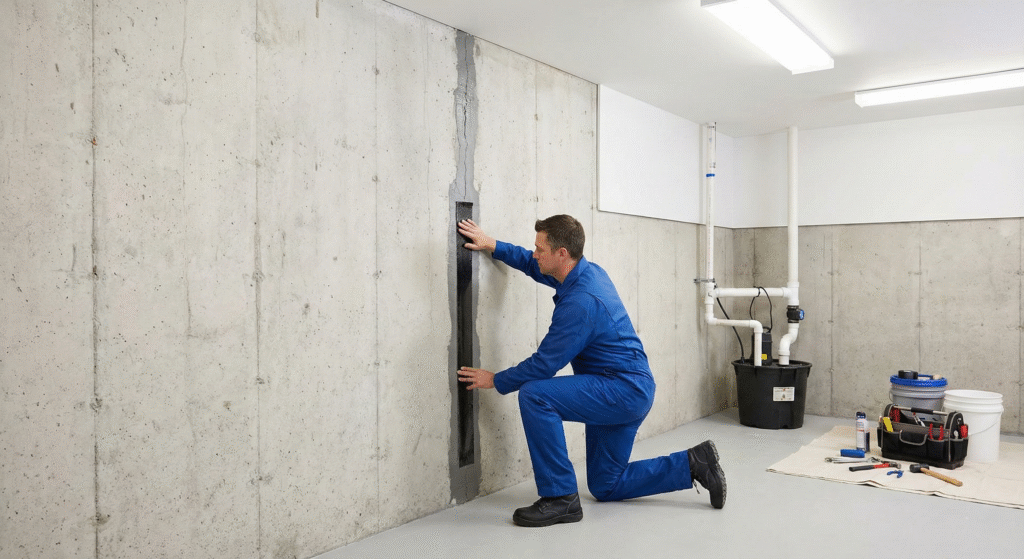
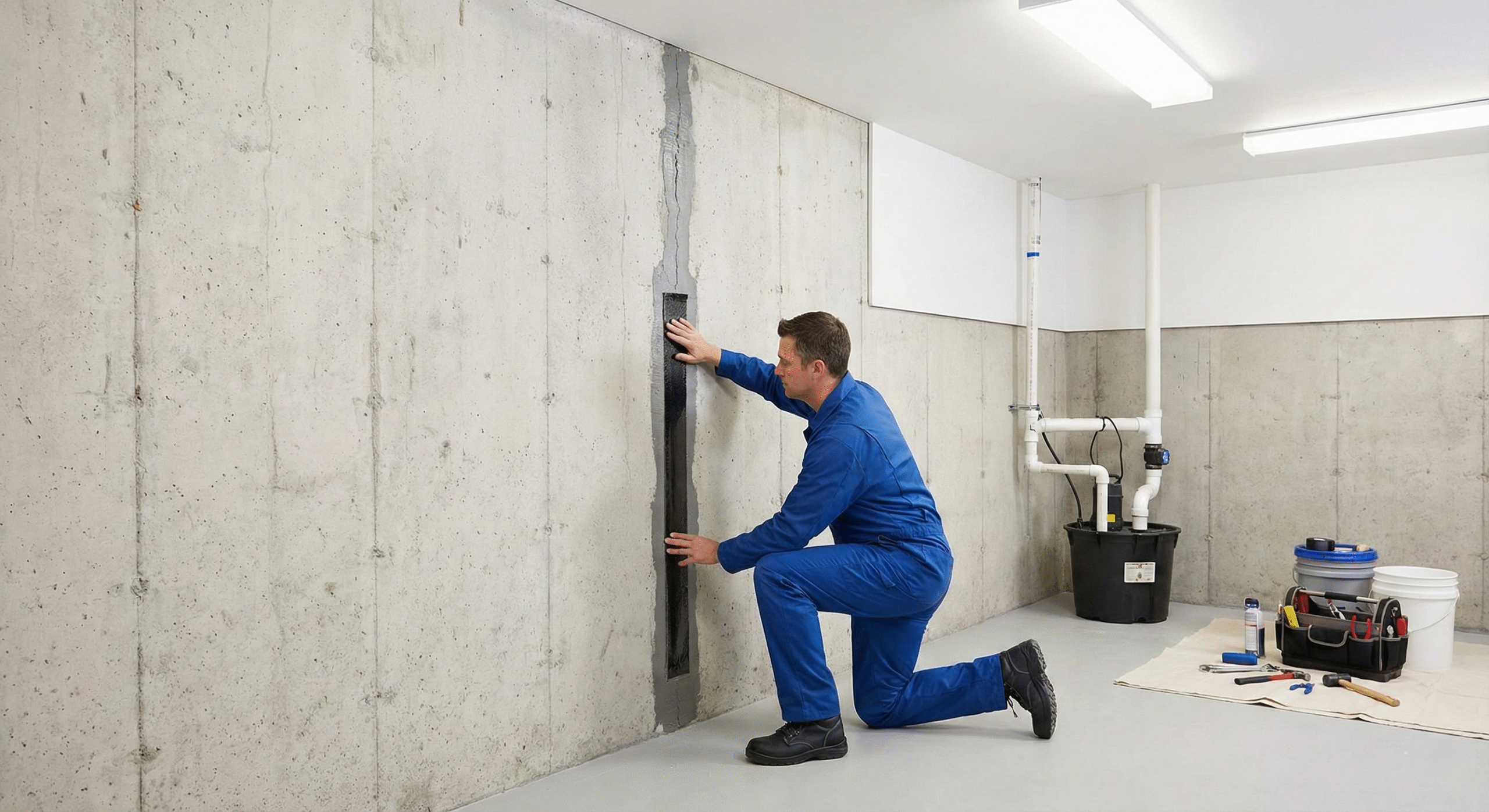
When walls start to bow or show structural stress, carbon fiber straps are the modern solution. These straps are bonded to the interior masonry wall with structural epoxy. Carbon fiber is stronger than steel and won’t stretch or corrode. The straps lock the wall in place, preventing any further inward movement. This stabilizes the foundation forever.
The straps lie flat against the wall, so you can cover them with drywall or paint. Unlike steel I-beams, they don’t take up valuable floor space. This is the perfect solution for finished basements. It’s a permanent fix with a long warranty. Your wall will be stronger than when it was built.
Underpinning for Settling Foundations
If a corner of your house is sinking, underpinning may be necessary. This involves installing steel piers deep into the ground to reach stable soil or bedrock. The weight of the home is then transferred from the unstable soil to these steel piers. We can often lift the foundation back to its original level. This closes cracks and realigns doors and windows.
We use helical piers or push piers depending on the soil conditions and load requirements. This is a major engineering procedure that solves deep-seated soil issues. It provides a permanent support system for your home. Stability is restored, protecting your property value. It’s the ultimate solution for settlement.
Water Management is Key
Repairing the concrete is only half the battle; managing the water is the other. Keeping water away from the foundation reduces hydrostatic pressure and frost heave risk. We check downspout extensions and grading around the home. Ensuring the ground slopes away from the walls is a critical preventative measure. We often recommend improving exterior drainage systems.
Installing perimeter drains or dry wells can divert water to safe areas. Sump pumps should be checked regularly to ensure they are working. A dry soil perimeter is a stable perimeter. We look at the big picture of your property’s drainage. Prevention is the best medicine for foundations.
Spalling and Surface Damage
Old foundations show signs of spalling, where the surface flakes off. This is usually due to moisture trapped inside the concrete freezing. We remove the loose material and apply a repair mortar. This restores the smooth surface and protects the reinforcing steel inside. Coating the exterior with a waterproof membrane adds extra protection. Don’t ignore spalling and let water reach the rebar and cause rust and expansion. This will lead to larger chunks of concrete breaking away. Surface maintenance extends the life of the wall. It improves the look of the home’s exterior base. A clean foundation means a well-maintained home.
The Importance of Professional Inspection
Foundation issues can be scary and overwhelming. A professional inspection gives you clarity and a repair plan. We use specialized tools to measure wall movement and floor levels. Our report tells you what’s happening and why. We offer transparent pricing for the fixes.
DIY repairs with hardware store caulk rarely fix the problem. They can sometimes mask serious issues until it’s too late. Relying on experts ensures the repair is structural and permanent. We follow all engineering protocols for safety. Your peace of mind is our top priority.
Regain Confidence in Your Home
A solid foundation is key to the safety and value of your home. Fixing repairs now shows you’re a responsible homeowner. It takes away the worry of what’s happening beneath your feet. A stable home is a safe haven for your family. We help you get that back.
We know foundation work can be stressful for homeowners. At Brookline Concrete Services, we try to make the process as smooth and transparent as possible. We’re committed to stabilizing homes in our community with proven engineering solutions. Let us strengthen the foundation of your home, so it stands for generations.
LATEST POSTS
High-Strength Concrete Mixes for Brookline Freeze–Thaw Pours
December 14, 2025
No Comments

Freeze–Thaw Concrete Foundation Repair for Brookline Homes
December 10, 2025
No Comments